


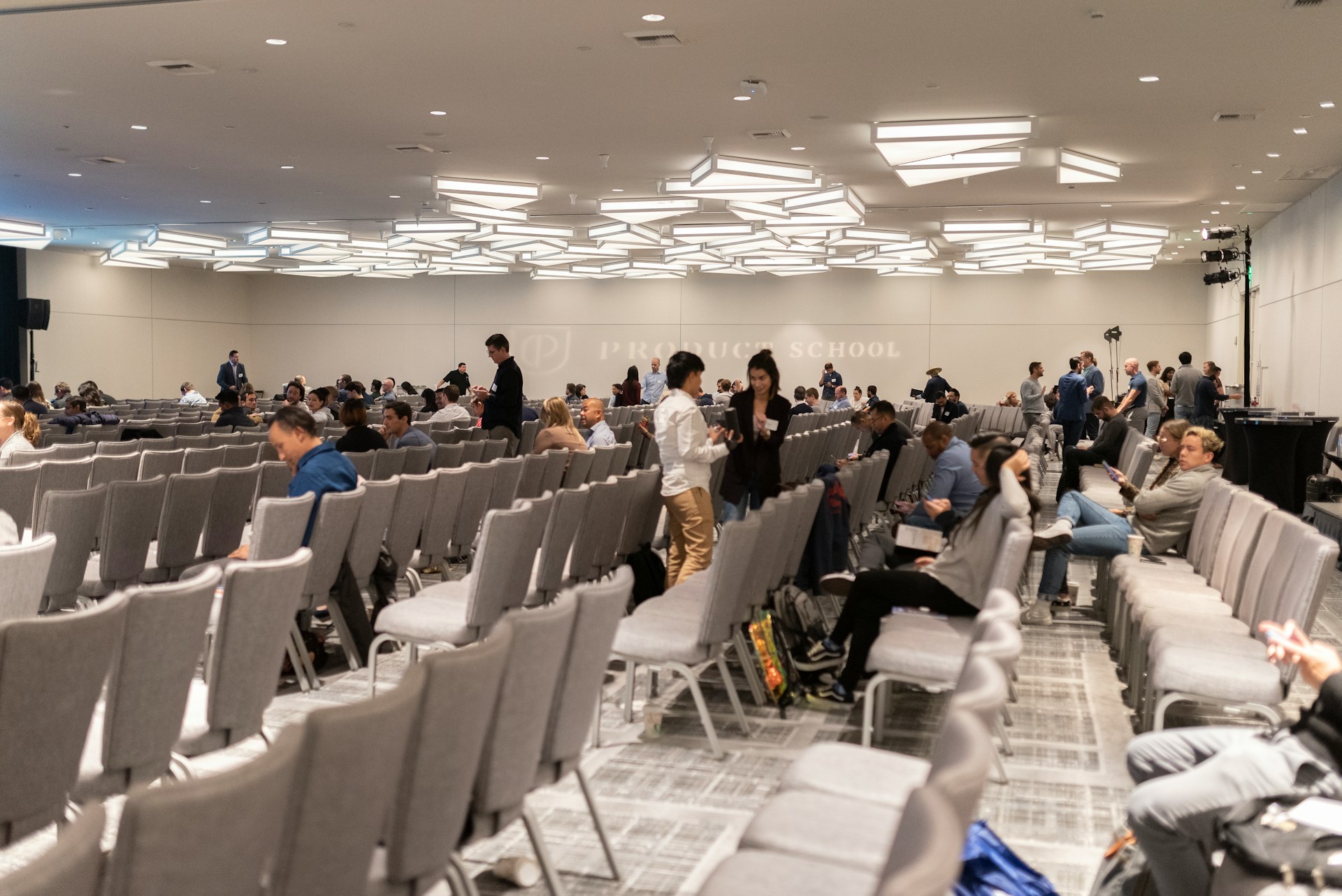
You flew home from the industry event with a full notebook and a plan. Three weeks later, the notebook is in the truck console, and the plan never left the parking lot. A tech quit, a big install went sideways, and the pricing overhaul you were fired up about is still an idea. HVAC, plumbing, and electrical owners live this cycle every year.
The gap is not motivation. It is that nobody followed up with you after the event. No one asked what you committed to, what you changed, or what got in the way. Nobody with real experience running a service company sat across from you in month two and pushed on your numbers.
Peer boards vs conferences for business owners comes down to one question. Do you need new input, or do you need someone to hold you to what you already know? In this guide, you'll discover what each format does well and where conferences leave owners short. You will also see how a facilitated board turns an idea into a commitment with a date on it. The examples run on crews and trucks, because that is usually who this choice falls to.
Peer Boards vs Conferences for Business Owners: The Structural Difference
Conferences transfer information. Peer boards create decision support that shows up every month, whether or not you feel like showing up.
That difference is structural. A conference is built around a stage, a schedule, and a hotel checkout time. A peer board is built around a small group of owners who know your business, your numbers, and the last commitment you made out loud.
Both serve leadership development. They just serve different parts of it. One expands what you know. The other changes what you do.
One-Time Ideas vs. Ongoing Decision Support
An event gives you a burst of ideas with no follow-up mechanism attached. You are the only person responsible for turning any of it into action, and you are already the busiest person in your company.
A peer advisory board works differently because the same people see you again in 30 days. They remember what you said about firing the underperforming install lead. They ask about it.
That repetition is what makes peer support useful for real business practices. You get input at the moment of decision, not six months later at the next event.
Education and Energy vs. Execution and Accountability
Conferences are strong on energy. You leave believing the next 12 months will be different, and belief has real value when you have been grinding alone.
Execution needs something else. It needs a scoreboard, a deadline, and somebody who notices when the deadline passes. Peer boards supply the last part, which is where most owner-led companies break down. The same missing piece drives most stalled growth problems inside the business itself.
So if conferences do not drive follow-through, what are they good for?
What Business Conferences Can Do Well
Nothing shows you what the rest of your industry is doing more quickly. In two days, you can absorb pricing trends, new equipment, software shifts, and hiring tactics that would take a year to learn on your own.
They also break isolation in a way that matters. Standing in a hallway with 400 other owners who understand what a bad summer feels like has real value for personal and professional development.
Trade shows add a layer that peer boards do not touch. You can put hands on equipment, compare vendors side by side, and negotiate in person.
Finding New Ideas, Trends, and Industry Connections
Conferences are built for input volume. Sessions on branding, sustainability, and business development expose you to approaches outside your normal circle.
Networking at these shows creates real connections. You meet the supplier rep who solves a parts problem, or the owner two states away who already fixed the dispatch issue you are fighting.
Free national programming exists too. The Small Business Week Learning Lab runs expert-led sessions at no cost, which makes it a low-risk way to test whether event learning fits how you absorb information.
When Trade Shows and Conferences Are Worth the Time
Some trips earn their cost. Others cost you three days of production and a hotel bill for a notebook you never open.
Go when at least one of these is true:
- You are making an equipment, software, or vendor decision and need to compare options in person
- Your knowledge of industry pricing or technology is more than a year stale
- You need to hire, and the event draws talent or recruiters in your trade
- A specific session addresses a problem you are working on right now
- Your leadership team needs shared exposure to new thinking, not just you
Skip the trip when you already know what to do and have not done it. That is not an information problem.
The next question follows naturally: what happens after you land?
Where Conferences Leave Service Business Owners Short
The shortfall is timing. Conferences deliver help on their calendar, and your operations create problems on yours.
Your worst weeks rarely line up with the event schedule. A key manager resigns in July. A profitability problem shows up in a mid-year profit and loss review. Neither waits for a January general session.
Owners also face a specific gap at these events: nobody there knows your business well enough to give you hard feedback. Advice from a stage is built for a room of 400, not for your $4M plumbing company with 11 techs and one overloaded office manager.
Why an HVAC Owner Can Return With Three Ideas and Implement None
Picture the pattern that repeats every year. An HVAC owner comes home with three priorities: a new membership program, a technician scorecard, and revised pricing.
Week one, a compressor failure at a commercial account eats four days. Week two, two techs call out,t and the owner runs calls. Week three, the ideas are still ideas, and the notebook is buried.
None of that reflects a lack of discipline. It reflects a missing structure. Ideas without owners, deadlines, and a review date lose to whatever is on fire that morning.
What Happens When a Plumbing Manager Quits Between Events
Your service manager gives notice in the middle of a busy season. You have to decide within days whether to promote internally, hire outside, or absorb the role yourself.
Who do you call? Your spouse is close to it. Your team cannot be objective. The connections you made at the conference are eight months cold, and a single hallway conversation does not carry that weight.
This is the exact moment ongoing peer support pays for itself. A group that already knows your org chart, your bench, and what you pay a lead tech can help you decide in an afternoon what would otherwise take three weeks of second-guessing.
So what makes a board produce follow-through when an event does not?
How a Facilitated Peer Board Creates Follow-Through
Follow-through comes from three things working together: a small group, a trained facilitator, and a monthly meeting that never moves. Remove any one and the model weakens.
The boards described here place owners in groups of fewer than 10 hand-picked, non-competing peers, led by a certified TAB (The Alternative Board) facilitator. Sessions run monthly, in person or virtually, and some board memberships include private one-to-one coaching between meetings.
The structure is the product. You bring one real issue. The group works it. You leave with a commitment and a date, and the group asks about it next month.
Why Small Groups of Non-Competing Owners Matter
Under 10 owners means everyone gets airtime. In a room of 40, you listen. In a room of 8, you present your problem and get eight informed responses.
Non-competing matters just as much. Nobody at the table wants your market share, so you can put real numbers on the table: gross margin by department, close rates, what you pay your best tech.
That openness is what makes the feedback usable. Owners in peer groups build leadership confidence because the input comes from people who have already made the decision you are facing.
How a Certified TAB Facilitator Turns Discussion Into Commitments
Without a facilitator, a group of owners drifts into storytelling and complaining. It feels good and changes nothing.
A trained facilitator runs the room differently:
- Keeps the discussion on the owner's actual issue instead of tangents
- Pushes past symptoms to the real constraint
- Requires a specific commitment with a date before the topic closes
- Opens the next session by reviewing what each owner committed to
- Protects the quiet owner who needs help but will not volunteer
Local boards are built for owners at $1M or more in revenue with teams of three or more, and a virtual group format exists for owners not yet at those thresholds. That is a different approach to peer advisory than a once-a-year event.
Which raises the practical question: which format fits the problem you have today?
Choosing the Right Format for Your Current Challenge
Match the format to the problem. Need input you do not have? Go to a conference. Need to execute on something you already understand? Get on a board.
Most owners default to conferences because they are easier to justify and easier to leave. A board asks for a monthly commitment, which is exactly why it works.
Framing peer boards vs conferences for business owners as an either-or is where owners go wrong. They are not the same purchase, and treating them as interchangeable is how you end up with five years of conference badges and the same three unfinished projects.
Choose a Conference When You Need Exposure, Ideas, or Industry Education
Pick the event when the gap is knowledge. New technology, new regulations, a market you have never sold into, or a vendor decision you cannot make from a website.
Also pick it when your leadership team needs shared exposure. Sending three managers to the same sessions creates a common vocabulary you can build on when you get home.
Set one rule before you go: come back with one priority, not three. One thing with an owner and a due date beats a full notebook.
Choose a Peer Board When You Need Candid Feedback and Accountability
Pick the board when the problem is execution, isolation, or a decision you keep circling. You know the answer directionally and need pressure to move.
Signs you are ready for a peer board:
- You make every significant call alone and second-guess most of them
- Your last three strategic initiatives stalled after week two
- You cannot name one person who will ask you about your numbers next month
- You have people problems you cannot discuss with your team or your family
- Growth has flattened, and you suspect the constraint is internal
A board is also where getting leaders aligned starts, because you have to look at your own decision habits before your team can change theirs.
Why Masterminds Do Not Always Work for Service Business Owners
Many masterminds run without a trained facilitator, so the loudest voice sets the agenda. Others mix industries so broadly that nobody understands your labor model or seasonality.
Cohort masterminds also tend to run on a fixed term and then dissolve. You build trust for six months and start over with new people, which resets the depth that makes feedback valuable.
The structural differences that matter are group size, facilitation, and whether the group persists long enough to know your business well. Any framework only helps when the room can pressure-test how it fits your company.
That leaves one piece to build: the support that runs during the 11 months you are not at an event.
Build Support That Holds Up Between Major Events
The support that changes your business runs in the gaps. It shows up in March when a manager quits, in July when margins slip, and in October when you are deciding next year's plan.
Build it deliberately. A monthly board seat gives you the outside perspective. For the internal work, the current programs are Fractional Sales Management, a part-time outside sales manager, and StratPro, a 6- to 9-month program for owners in the $2M to $10M range who need a real leadership team.
Which one fits, and what each covers, is worth a conversation. Jackson Advisory Group reports a 32% average productivity increase and an 88% improvement in team communication across its client work; treat those as the firm's reported figures rather than a guarantee.
Pair that with the internal work only you can do. Set a quarterly review of your own calendar and decision load, and be honest about which decisions are still routing through you that should not be.
Stop Choosing Between Ideas and Follow-Through
Conferences and peer boards are not competing purchases. Conferences fill your idea pipeline once or twice a year. A peer board makes sure something from that pipeline gets built.
If you are the only decision-maker in your company and your best thinking happens alone in a truck, the format you are missing is the monthly one. A small room of non-competing owners, a facilitator who holds you to your commitments, and 12 chances a year to get real feedback on real numbers changes how you lead.
You do not need another conference badge. You need a room of operators with the same problems and the structure to work through them together. Check next availability for a peer board seat, or start with a short conversation with Dale at Jackson Advisory Group to see whether a board or a coaching program fits where your business is right now.
Frequently Asked Questions
Are Business Conferences Worth It for Home Service Owners?
Yes, when you go with a specific decision to make or a knowledge gap to close. Conferences pay off for equipment comparisons, pricing trends, and recruiting. They pay off less when you already know what to do and have not executed it.
What Is the Difference Between a Peer Board and a Business Conference?
A conference delivers education and energy in one concentrated burst, then ends. A peer board delivers ongoing accountability and candid feedback through monthly facilitated sessions with the same small group of owners all year.
How Often Do Business Owner Peer Boards Meet?
Most boards meet once a month, in person or virtually, and some include private one-to-one coaching between meetings. That monthly rhythm is what allows the group to follow up on commitments made at the previous session.
Can a Peer Board Help When I Am Stuck Making Every Decision Alone?
Yes, that is the core use case. You bring one real issue to a group of fewer than 10 non-competing owners who have faced similar calls. You leave with input, a decision, and a date the group will ask about next month.
Should I Attend Conferences and Join a Peer Board?
Many owners do both, and they serve different jobs. Use conferences once or twice a year for new input and vendor decisions, and use the board to make sure one priority from each trip gets built.
What Should I Look for in a Peer Board for an HVAC, Plumbing, or Electrical Business?
Look for fewer than 10 members, non-competing owners in your revenue range, and a trained facilitator who requires commitments with deadlines. Ask about month-to-month terms and whether you can sit in on a session before joining.